TECHNOLOGY · PORTABLE DAC/AMP
iFi Gryphon, Three Months On: The Portable DAC Built for Flights
Three months in, the portable DAC that makes long-haul listening genuinely better — held back only by its Bluetooth and a fiddly interface.
The Gut Check
The three questions a frequent flyer actually asks. 50% of the score.
The Carry-On Test
Does each part earn its place? 50% of the score · weighted.
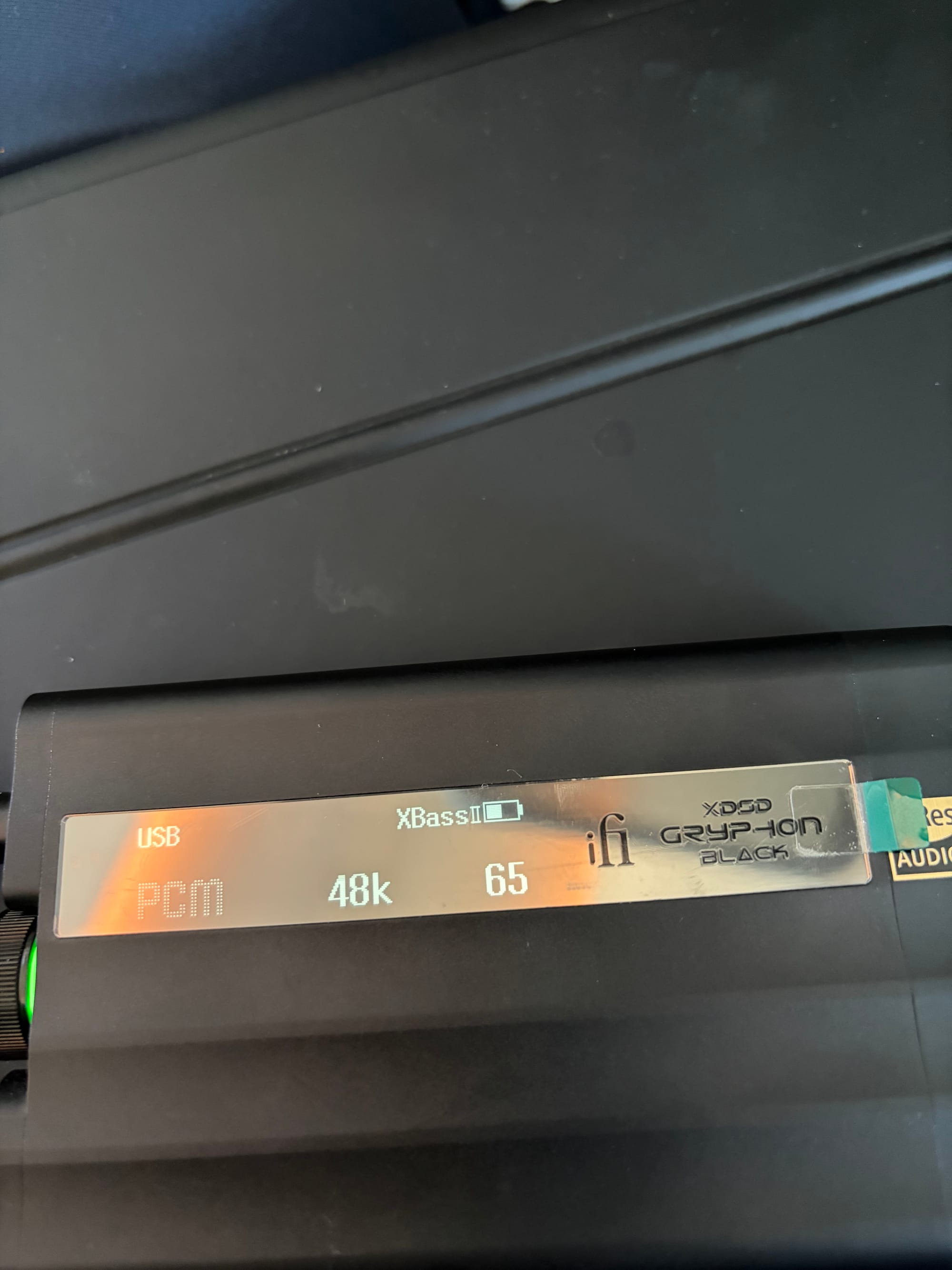
Excellent sound with real power for most IEMs, and the X-Bass and X-Space DSP are the whole point — they thicken the low end enough to bury (not erase) jet drone and open up the stage on a cramped flight.
About seven hours of real use between charges — enough for a long-haul sector with margin to spare.
Compact enough to slip into a side pocket; it simply disappears into the bag.
Excellent build — it feels like it will outlast the IEMs plugged into it.
Hard to place: a clear step up from the hip-dac, but a newer, more powerful iFi has already landed, and I can’t yet say how it stacks up against similarly priced rivals.
What works
- Excellent, powerful sound for most IEMs
- X-Bass and X-Space genuinely improve in-flight listening
- Compact enough for a side pocket
- Excellent build quality
- Around seven hours of battery
Watch out for
- Mediocre Bluetooth — you’ll want the USB-C cable
- Interface takes some getting used to
- Already superseded by a newer, more powerful model
The right DAC doesn’t just make music louder on a plane — it changes your relationship with the engine noise.
Three months of near-daily use, a good chunk of it at altitude, and the Gryphon has earned its place in the side pocket. It is beautifully built, compact enough to forget you are carrying it, and has the power to drive most of the IEMs I’d actually travel with. As a piece of hardware it is genuinely impressive.
The reason it matters on a flight, though, is the DSP. The X-Bass and X-Space functions are what set it apart: X-Bass thickens the low end enough to quiten the jet drone under the music — it doesn’t eliminate the engine, but it stops it dominating — and X-Space widens a stage that cheap gear collapses in a noisy cabin. On a long-haul sector those two switches are the difference between tolerating the noise and forgetting it.
What lets it down is everything around the sound. The Bluetooth is mediocre enough that you’ll give up and reach for the USB-C connector, which rather defeats the point of having it. And the interface is not intuitive — it takes a few sessions before the logic becomes second nature. Neither is a dealbreaker, but both are the kind of friction a product this good shouldn’t have.
The X-Bass and X-Space switches don’t silence the aircraft — they bury it under the music, which on a fourteen-hour flight is the next best thing.
The Testing Log
Roughly three months of use, a good share of it in flight, driving the IEMs in my rotation over the USB-C connector into a phone and an iPad. Battery held up to about seven hours of real listening between charges. Tested the two things that matter in a cabin: whether it could make engine noise recede (X-Bass does, decently) and whether it could last a long-haul sector (it can).
The Competition
It’s a clear step up from the iFi hip-dac — more power, more control, better on a plane. The honest gap in this review is the wider field: iFi has already released a newer, more powerful model (which I’ve bought and am moving to), and I haven’t yet run the Gryphon head-to-head against other similarly priced DACs, so I can’t tell you where it lands against them.
What Would Change the Score
Bluetooth that you’d actually use, and a more intuitive interface, would push this into the 90s on their own. A head-to-head against similarly priced rivals could move Value in either direction — that’s the test I still owe it.
How this was tested: Bought at retail and used near-daily for about three months, across flights and at the desk, paired with my own IEMs over USB-C. Nothing was provided by iFi, and nothing here is sponsored.
How the ITC Score is built: Gut Check (Yes 100 / Maybe 50 / No 0, averaged) = 83. Carry-On Test (Packed 100 / Caveats 50 / Left 0, weighted) = 95. ITC = the average of the two = 89. Verdict: 80+ Packed · 60–79 Packed with caveats · under 60 Left at the gate.