TRAVEL · BUSINESS CLASS
United Polaris 935, Heathrow to Los Angeles: Competent, and Coasting
A competent, on-time crossing let down by a seat that hasn’t been refreshed in years and a fare that didn’t reflect it.
The Gut Check
The three questions a frequent flyer actually asks. 50% of the score.
The Carry-On Test
Does each part earn its place? 50% of the score · weighted.
The Polaris cabin hasn’t meaningfully changed in about five years — it feels cramped against what the competition now flies. United is maintaining this product, not investing in it.
Competent and by-the-book, but no acknowledgement of Global Services or 2M+ miles, and dessert only turned up when I asked.
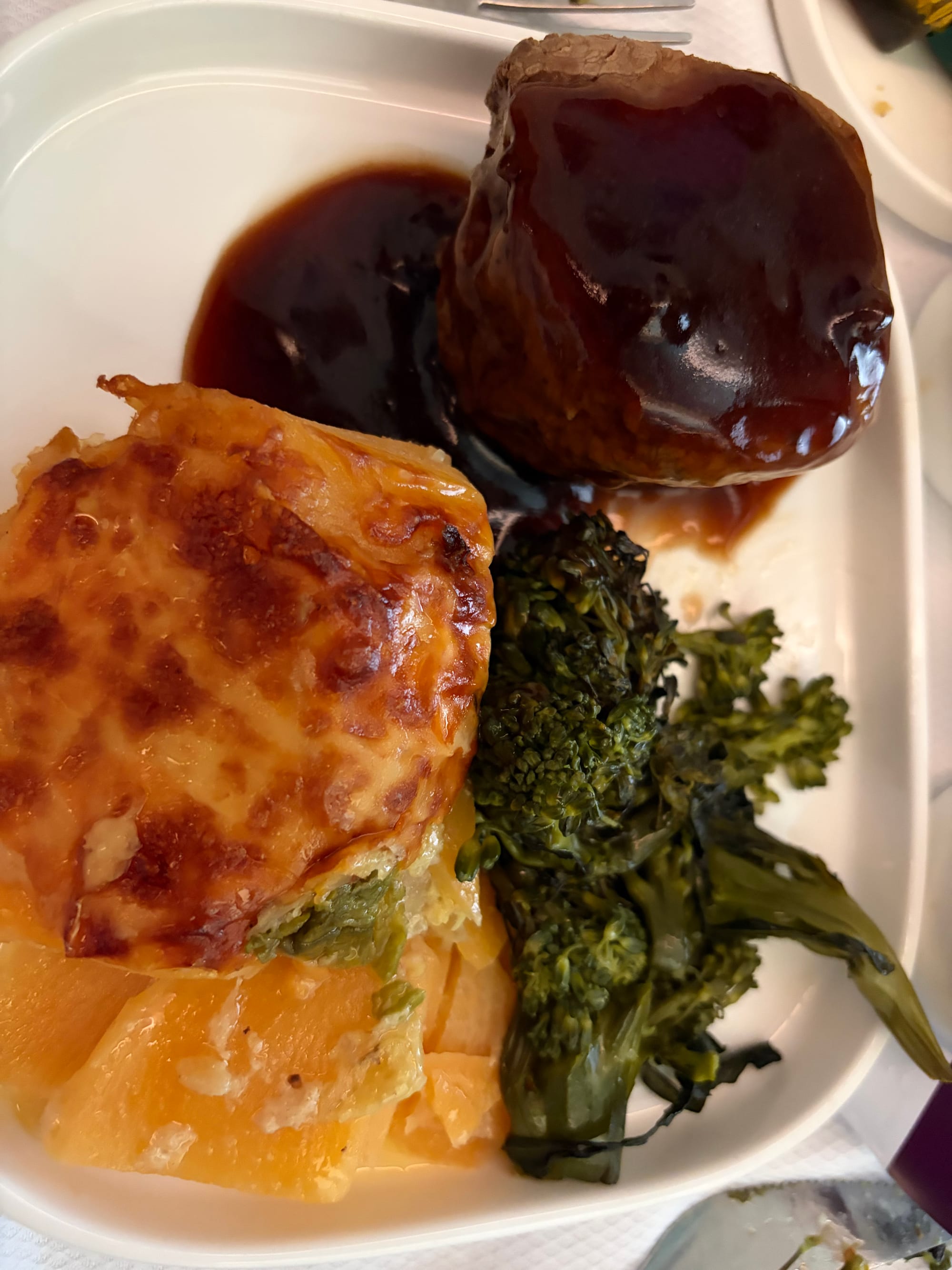
Pre-ordering killed the uncertainty, and being offered first choice before landing was a nice touch. The vegetable biryani was genuinely good; Laurent-Perrier has joined the list.
Late boarding — the cabin wouldn’t cool in the London heat — but we still left on time and landed early. Terminal 6 plus Global Entry meant a five-minute customs clearance.
The highest fare I’ve ever paid on this route — geopolitics and fuel, not product. Aging hardware and no status recognition did nothing to justify it.
What works
- Pre-order plus first-choice meal before landing removed all food uncertainty
- Vegetable biryani was genuinely good, not merely adequate
- Terminal 6 arrivals + Global Entry = five-minute customs
- Wi-Fi stayed reliable across the whole crossing
Watch out for
- Polaris seat is largely unchanged in ~5 years and feels tight against newer rivals
- No status recognition despite Global Services and 2M+ miles
- Dessert only came when asked for
- Record fare with no product to justify it
- Premium-cabin Wi-Fi is still a paid extra
A business-class seat has one job on a ten-hour daylight crossing: get out of your way. United’s does — it just hasn’t done anything more in five years.
This was a competent, on-time crossing, and if that were the whole test United would score well. The operation held up in a London heatwave that delayed boarding, the meal was better than the cabin around it, and Terminal 6 spat me out through customs in five minutes. On the fundamentals, it delivers.
The problem is everything the fundamentals sit inside. The Polaris seat has barely moved in five years while competitors have rolled out doors, more space and better bedding, and the fare — the highest I have ever paid on this route — asked me to pay for progress that isn’t there. A product coasting on a reputation it earned in 2017 is a hard sell at a 2026 price.
Polaris isn’t bad. It’s just standing still while everyone around it keeps moving — and charging more to do it.
The Testing Log
United 935, London Heathrow to Los Angeles, June 2026, round-trip in Polaris business. Global Services tier, meal pre-ordered, Global Entry on arrival. Tested the two things a long daylight crossing lives or dies on: whether the seat let me work and rest across ten hours (it was fine, no better), and whether the operation held together (it did — on time out, early in).
The Competition
Book a competitor flying a current-generation business seat if the hardware matters to you — several now run rings around Polaris on space and privacy. United wins only on the operational basics and the Terminal 6 arrival; if those are what you value, it still holds up.
What Would Change the Score
A refreshed seat moves Seat & Sleep from a caveat to Packed and this clears the high 70s. A fare that reflected the actual product — rather than the fuel market — would rescue Value on its own.
How this was tested: United 935, LHR–LAX, June 2026, round-trip, Polaris business. Paid a record fare for the route at retail; Global Services status held; nothing was comped, upgraded, or provided.
How the ITC Score is built: Gut Check (Yes 100 / Maybe 50 / No 0, averaged) = 67. Carry-On Test (Packed 100 / Caveats 50 / Left 0, weighted) = 63. ITC = the average of the two = 65. Verdict: 80+ Packed · 60–79 Packed with caveats · under 60 Left at the gate.